

Using AI Tools During Medicare AEP: The CMS Rules on Recording, Disclaimers and Calls (2026)

Prices and facts checked November 2, 2026. We don't accept payment for rankings.

On this page
- Rule 1: record and keep every marketing and sales call
- Rule 2: the TPMO disclaimer comes before benefits
- Rule 3: no unsolicited calls or texts, by AI or anyone
- Rule 4: lead-generation disclosures in chats and calls
- Rule 5: Scope of Appointment, now without the 48-hour wait
- An AEP checklist for AI tools
- FAQ
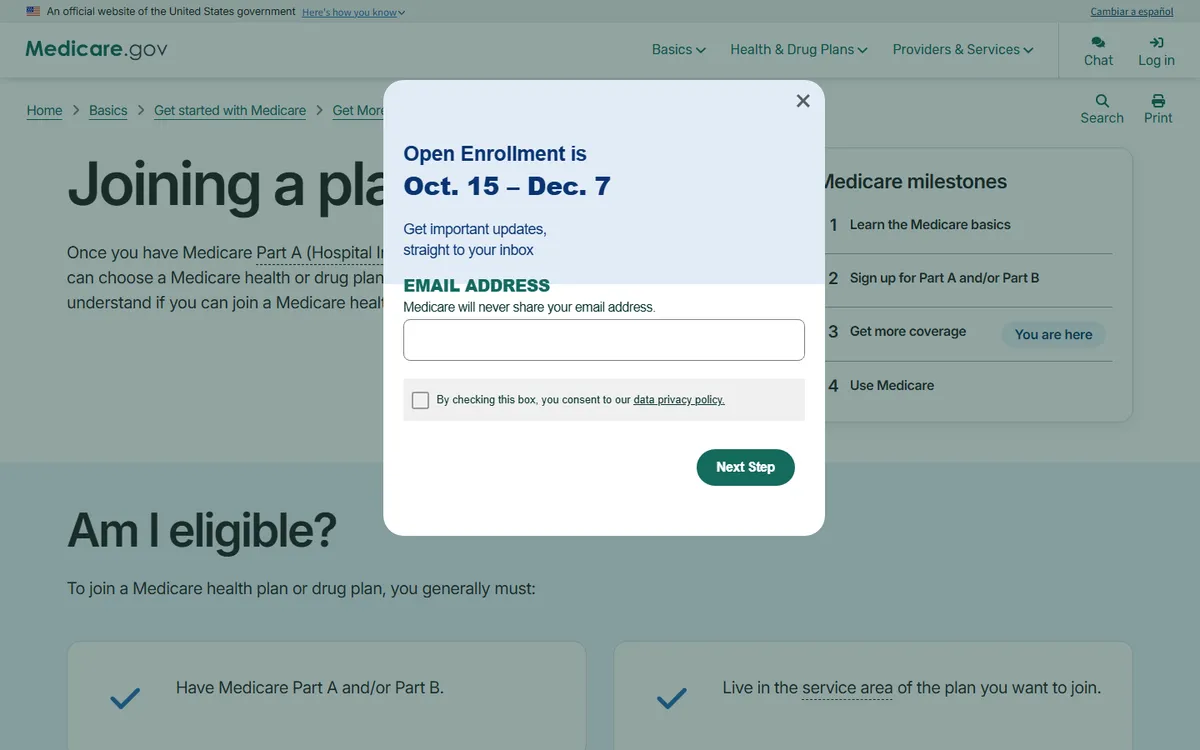
Why now: Medicare's Annual Enrollment Period (AEP) runs from October 15 to December 7, 2026, with changes taking effect January 1 (Medicare.gov). It's the first AEP under CMS's plan year 2027 marketing rules, which took effect October 1, 2026 (Action Benefits). Many agencies now use AI receptionists, AI notetakers, chatbots and AI dialers to cope with AEP volume. CMS's rules don't mention AI, but they apply to every call and chat those tools handle.
The short version:
- Every marketing and sales call must be recorded in full and kept for 6 years, with audio for the first 3 years.
- The TPMO disclaimer must be said before any benefits are discussed, including by an AI.
- No cold calls, robocalls or unsolicited texts to beneficiaries, whatever tool places them.
- A Scope of Appointment is still needed before a personal marketing appointment, but the 48-hour wait is gone.
Not legal advice. This summarizes the federal regulations as published on eCFR on November 2, 2026. Your carriers' contracts and FMO requirements can be stricter, so check them too.
Rule 1: record and keep every marketing and sales call
Under 42 CFR 422.2274, third-party marketing organizations (TPMOs) must record all marketing and sales calls, including the audio of web-based calls, in their entirety, and keep them for at least 6 years. For the first 3 years the records must be audio. For years 4 to 6, you may keep the audio or a complete and accurate transcript (eCFR, 42 CFR 422.2274). That replaced the old 10-year rule.
What this means for AI tools:
- An AI transcript isn't enough on its own. For the first 3 years you need the audio. Check that your AI receptionist or notetaker saves the full recording, not just a summary or transcript.
- Check where recordings live and for how long. Find out how long your AI tool keeps audio. If it's less than 6 years, change the setting or export recordings to storage you control.
- A summary isn't a "complete and accurate transcript." AI meeting summaries leave things out. For years 4 to 6, keep a full transcript or the audio.
- Check enrollment calls and carrier rules. Industry guides disagree on whether enrollment calls fall under the 6-year rule or still need 10 years, and carrier contracts can require more (NCC). Ask each carrier, and keep the longer period if in doubt.
Recording rules also run into state consent laws. In all-party consent states, tell callers the call is recorded at the start. See is it legal for an AI receptionist to record calls?, which applies to any business.
Rule 2: the TPMO disclaimer comes before benefits
If you sell for more than one Medicare Advantage organization, the standardized TPMO disclaimer must be said on sales calls before any discussion of benefits. It must also be sent electronically in email, online chat or other electronic messages, and shown prominently on your website (eCFR, 42 CFR 422.2267(e)(41)). Under the 2027 rules, the old "first 60 seconds" deadline is gone. Introductions and basic questions can come first (NCC).
For AI tools:
- AI receptionists: the simplest approach is to not let the AI discuss plans or benefits at all. It answers, books the appointment, and hands plan questions to a licensed agent. If it does discuss benefits, it must read the exact disclaimer first.
- Website chatbots: if a chatbot talks about plans, the disclaimer must appear in the chat.
- AI-drafted emails and texts: include the disclaimer in any electronic marketing message.
Rule 3: no unsolicited calls or texts, by AI or anyone
CMS bars unsolicited telephone solicitation, including cold calling, robocalls, text messages and voicemail messages. That covers calls based on referrals and calls to people who attended a sales event without giving permission. A call isn't unsolicited if the beneficiary consented or contacted you first, for example by returning a business reply card (eCFR, 42 CFR 422.2264).
On top of that, the FCC treats AI-generated voices as "artificial" voices under the TCPA, so AI voice calls need the person's prior express consent (FCC). See AI voice calls and the TCPA.
In practice: only point an AI dialer or texting tool at people who asked to hear from you, and keep the proof of consent.
Rule 4: lead-generation disclosures in chats and calls
When a TPMO generates leads, it must tell the beneficiary that their information will go to a licensed agent for future contact. That's verbal on the phone and electronic in email or online chat. If it transfers a caller, it must say the caller is being transferred to a licensed agent who can enroll them in a new plan. Personal data can only be shared with another TPMO with prior express written consent (eCFR, 42 CFR 422.2274).
For AI tools: if a chatbot or AI receptionist collects a beneficiary's details for an agent, script the disclosure into it. If an AI voice agent warm-transfers callers, script the transfer disclosure too.
Rule 5: Scope of Appointment, now without the 48-hour wait
Agents must still secure and document a Scope of Appointment (SOA) before a personal marketing appointment (eCFR, 42 CFR 422.2274). The 2027 rules removed the 48-hour waiting period, so an appointment can follow as soon as the SOA is complete. Agents can now also collect SOAs at educational events (Action Benefits).
For AI tools: if an AI receptionist books appointments, make sure the SOA is captured and stored with the booking, using your carriers' approved form or process.
An AEP checklist for AI tools
| Tool | Check |
|---|---|
| AI receptionist | Full audio recording kept 6 years; recording notice; doesn't discuss benefits, or reads the TPMO disclaimer first; transfer disclosure; SOA captured with bookings |
| AI notetaker on sales calls | Saves full audio, not just summaries; retention set to 6+ years; client told the call is recorded |
| Website chatbot | TPMO disclaimer in the chat if plans come up; lead-sharing disclosure; no sharing with other TPMOs without written consent |
| AI dialer or texting | Only contacts people who consented or reached out first; TCPA consent records kept; opt-outs honored |
| AI-written marketing | TPMO disclaimer included; carrier approval where required; no "free" for $0-premium plans |
Your agency's AI policy should cover these too. See our AI use policy template for insurance agencies and the best AI receptionists for insurance agencies.
FAQ
How long do Medicare sales call recordings have to be kept?
At least 6 years under 42 CFR 422.2274 as amended for 2027: audio for the first 3 years, then audio or a complete and accurate transcript for years 4 to 6. Carrier contracts may require longer, and industry guides disagree on whether enrollment calls still need 10 years.
Can an AI receptionist answer Medicare plan questions?
Only if it follows the same rules as a person: the TPMO disclaimer before discussing benefits, a recorded call kept for 6 years, and the required disclosures. Many agencies limit the AI to booking appointments and hand plan questions to a licensed agent.
Can I use an AI dialer to call Medicare leads during AEP?
Only for people who consented or contacted you first. CMS bans unsolicited calls, robocalls and texts to beneficiaries, and the FCC requires prior express consent for AI-voice calls under the TCPA.
Is the 48-hour Scope of Appointment rule still in effect?
No. The plan year 2027 rules removed the 48-hour waiting period from October 1, 2026, but you still need a documented Scope of Appointment before a personal marketing appointment.
Sources
Pages we used for this article, checked on or before the update date above.
- Medicare.gov · medicare.gov
- Action Benefits · blog.actionbenefits.com
- eCFR, 42 CFR 422.2274 · ecfr.gov
- NCC · nccagent.com
- eCFR, 42 CFR 422.2267(e)(41) · ecfr.gov
- eCFR, 42 CFR 422.2264 · ecfr.gov
- FCC · fcc.gov
Changelog: Nov 2, 2026: first published.