

The FTC's Fake Review Crackdown Has Reached Home Services. What Contractors Need to Know

Prices and facts checked October 13, 2026. We don't accept payment for rankings.
On this page
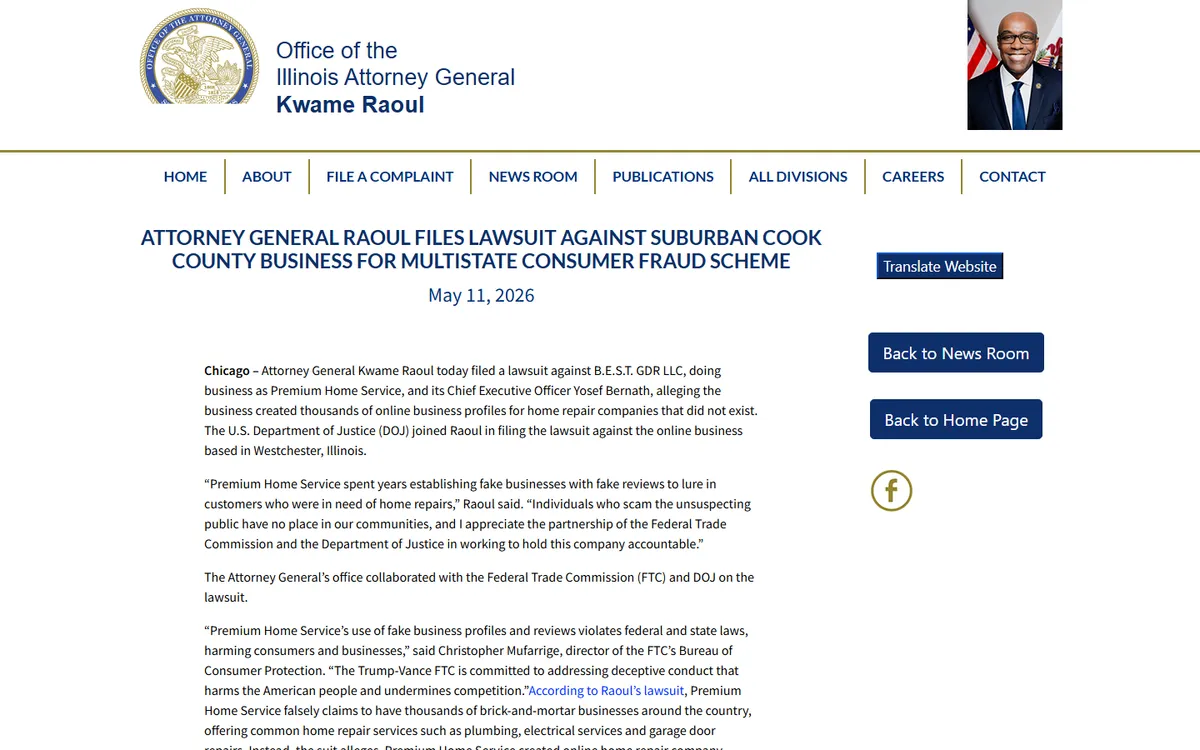
What happened: on May 11, 2026, the DOJ (for the FTC) and the State of Illinois sued Premium Home Service, alleging it created thousands of fake local home-repair business listings and posted fabricated five-star reviews to bury real one-star reviews (FTC). Illinois says the scheme used 7,600+ local-looking phone numbers across 250+ area codes and reached more than 100,000 consumers since at least 2018 (Illinois Attorney General). Minnesota filed a parallel case the same day.
Why it matters today: it's one of the first enforcement actions under the FTC's Consumer Reviews and Testimonials Rule aimed at home services, and it came after the FTC sent warning letters to ten companies in December 2025. Contractors using AI to request, write or respond to reviews need to know where the lines are.
Not legal advice. The Premium Home Service claims are allegations, not findings. Ask counsel about your review and marketing practices.
The rule in plain English
The rule took effect October 21, 2024 and bans six practices (Nelson Mullins):
| Banned | Contractor example |
|---|---|
| Fake reviews | Reviews from people who weren't customers, or written by staff or family without disclosure |
| Buying positive sentiment | "$25 off your next service for a 5-star review" |
| Undisclosed insider reviews | Employees or relatives reviewing without saying so |
| Company-controlled "independent" review sites | A "Best Plumbers in Town" site you own |
| Review suppression | Threatening customers over bad reviews, or showing only 5-star reviews as if they're all your reviews |
| Fake social signals | Buying followers, likes or views |
Penalties: up to $53,088 per violation. Recipients of the December 22, 2025 warning letters were told to stop immediately and confirm their compliance steps in writing (Crowell & Moring).
What the Premium Home Service case shows
- Listings matter, not just reviews. Regulators focused on who actually does the work and where. Fake addresses and local numbers routed to overseas call centers were central (Gala Law).
- Memberships and fees sold before a technician was dispatched were part of the alleged harm.
- Federal and state regulators move together, so expect parallel cases.
Where AI fits

AI tools are now common for review requests, replies and marketing copy. Safe and unsafe uses:
| Fine | Not fine |
|---|---|
| AI-drafted requests sent to every real customer after a job | AI-written reviews posted as if from customers |
| AI-drafted replies to reviews, approved by you | Asking only happy customers via AI "sentiment gating" in a way that misrepresents your overall rating |
| AI summarizing review themes to improve service | Using AI to generate profiles, photos or listings for locations you don't operate |
Incentives: you can offer an incentive for leaving an honest review, as long as it isn't conditioned on the review being positive. Disclose any incentive.
A compliance checklist
- Ask every customer for a review, not just the happy ones.
- Never post, buy or ghost-write reviews, including with AI.
- Disclose any reviews from employees or relatives.
- Keep incentives sentiment-neutral.
- Audit your listings: real address, real license, real company name on every profile.
- Check your marketing vendors and lead-gen partners. Their practices can become your problem.
- Respond to negative reviews professionally; never threaten legal action over honest ones.
AI that texts customers for reviews also has to follow consent rules. See our TCPA opt-out guide.
FAQ
Can I use AI to reply to Google reviews?
Yes. Review replies are your own speech. Read each one before posting so it's accurate and doesn't reveal customer details.
Is review gating illegal?
Asking only satisfied customers, then implying your reviews represent everyone, can count as suppression under the rule. Platforms like Google also ban review gating in their policies.
Does the rule apply to small contractors?
Yes. It applies to businesses of any size, and penalties are per violation.
Sources
Pages we used for this article, checked on or before the update date above.
- FTC · ftc.gov
- Illinois Attorney General · illinoisattorneygeneral.gov
- Nelson Mullins · nelsonmullins.com
- Crowell & Moring · crowell.com
- Gala Law · blog.galalaw.com
- Towfiqu barbhuiya · unsplash.com
Changelog: Oct 13, 2026: first published.