Deepfake Voice Fraud Is Targeting Advisors' Clients. A Verification Playbook

Prices and facts checked October 13, 2026. We don't accept payment for rankings.

On this page
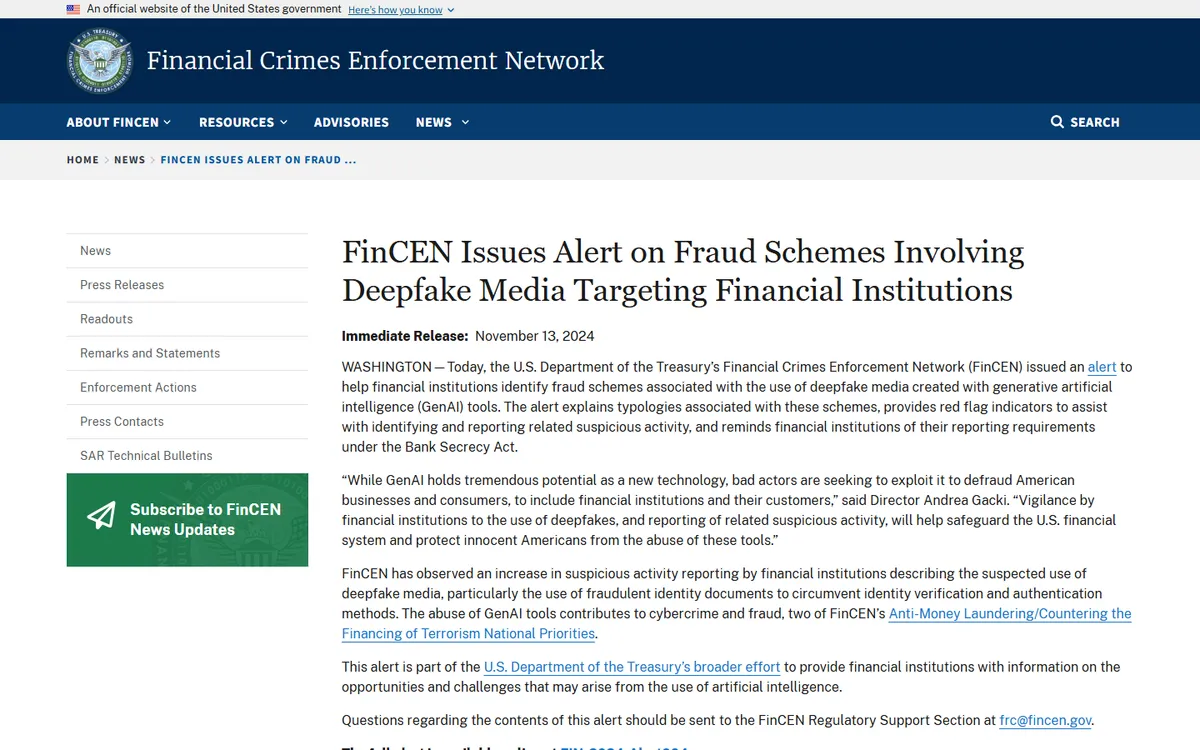
What happened: in June 2026, FINRA published an investor alert warning that fraudsters are cloning the voices of investment professionals to call clients about an "urgent account problem", and that brokerage firms have reported these vishing calls leading to account takeovers (FINRA, Jun 18, 2026). It follows FinCEN's deepfake alert to financial institutions in November 2024 and an FBI warning about AI-voiced impersonation in May 2025.
Why it matters today: advisory businesses run on trust and phone calls. A cloned voice of you calling a client, or of a client calling you to move money, is now cheap to produce. Your verification process is your defense.
What the regulators have said
| Date | Who | Warning |
|---|---|---|
| Nov 13, 2024 | FinCEN | Alert FIN-2024-Alert004: rising suspicious-activity reports involving deepfakes, especially fake ID documents used to beat identity checks (FinCEN) |
| May 15, 2025 | FBI | Texts and AI-generated voice messages impersonating senior officials, used to steal account credentials (FBI IC3) |
| Dec 2025 | Canadian regulator CIRO (reported) | Urgent redemption and transfer requests are a red flag. Advisors have faced discipline for failing to verify identity (Investment Executive) |
| Jun 18, 2026 | FINRA | Cloned-voice calls posing as investment professionals, fake voicemails, deepfake investment promotions (FINRA) |
The scams that hit advisory firms
- "Your advisor" calling the client with a cloned voice, asking for login details or a verification code (FINRA).
- "The client" calling you to redeem and wire funds to a new bank account, usually with urgency.
- Fake ads and social accounts using a firm's brand or a well-known figure's AI likeness to promote fraudulent investments. Economist David Rosenberg described AI replicas of himself promoting fake funds as "completely out of control" (Investment Executive).
- Synthetic identities at onboarding: altered or AI-generated ID photos and documents (NASCUS summary of the FinCEN alert).
FinCEN's red flags (summarized)
- ID photo looks altered or doesn't fit other details, like date of birth
- Several ID documents that don't match each other
- A third-party webcam plugin during live verification
- Switching channels after repeated "technical glitches" during verification
- A reverse-image search matches a gallery of AI-generated faces
- Deepfake-detection software flags a photo or video
- Detection tools flag AI-generated text in responses
- Location or device data doesn't match the ID
- A new account with rapid transactions, risky payees or many rejected payments
Source: NASCUS summary of FIN-2024-Alert004. Firms filing SARs use the key term FIN-2024-DEEPFAKEFRAUD.
A verification playbook for your practice
- Call back on a known number before acting on any request to move money, change bank details or reset access. Never use the number in the message (FBI).
- Treat urgency and secrecy as red flags, whoever the caller sounds like (FINRA).
- Set verbal passphrases with high-net-worth clients for money movement.
- Require two people to approve new payee details or first-time wires.
- Tell clients in writing that you'll never ask for passwords or codes by phone.
- Limit your voice footprint: long webinar recordings and podcasts give cloners plenty of audio.
- Log incidents and report them to your broker-dealer or custodian, and to IC3.
Recording calls with an AI notetaker? Keep those recordings secured: they're also raw material for voice cloning. See AI notetakers and SEC/FINRA recordkeeping.
FAQ
Can deepfake detection software solve this?
It helps at onboarding, and FinCEN lists detection-tool flags as red flags. For phone requests, a callback process is more reliable than any detector.
Do I have to report deepfake fraud attempts?
Firms with SAR obligations report suspicious activity under their AML programs. Ask your compliance team, broker-dealer or custodian how to escalate.
How much audio does a voice clone need?
Very little. Publicly available clips such as webinars, conference panels and social videos can be enough.
Sources
Pages we used for this article, checked on or before the update date above.
- FINRA, Jun 18, 2026 · finra.org
- FinCEN · fincen.gov
- FBI IC3 · ic3.gov
- Investment Executive · investmentexecutive.com
- NASCUS summary of the FinCEN alert · nascus.org
Changelog: Oct 13, 2026: first published.