

25 ChatGPT Prompts for Real Estate Agents (That Stay Fair Housing Safe)

Prices and facts checked October 17, 2026. We don't accept payment for rankings.

On this page
Short answer: good prompts give the AI verified property facts, tell it who you're writing for without describing who should live there, and ask it to flag anything it can't confirm. The prompts below are built that way. Copy one, fill in the brackets, and always check the result before it goes anywhere public.
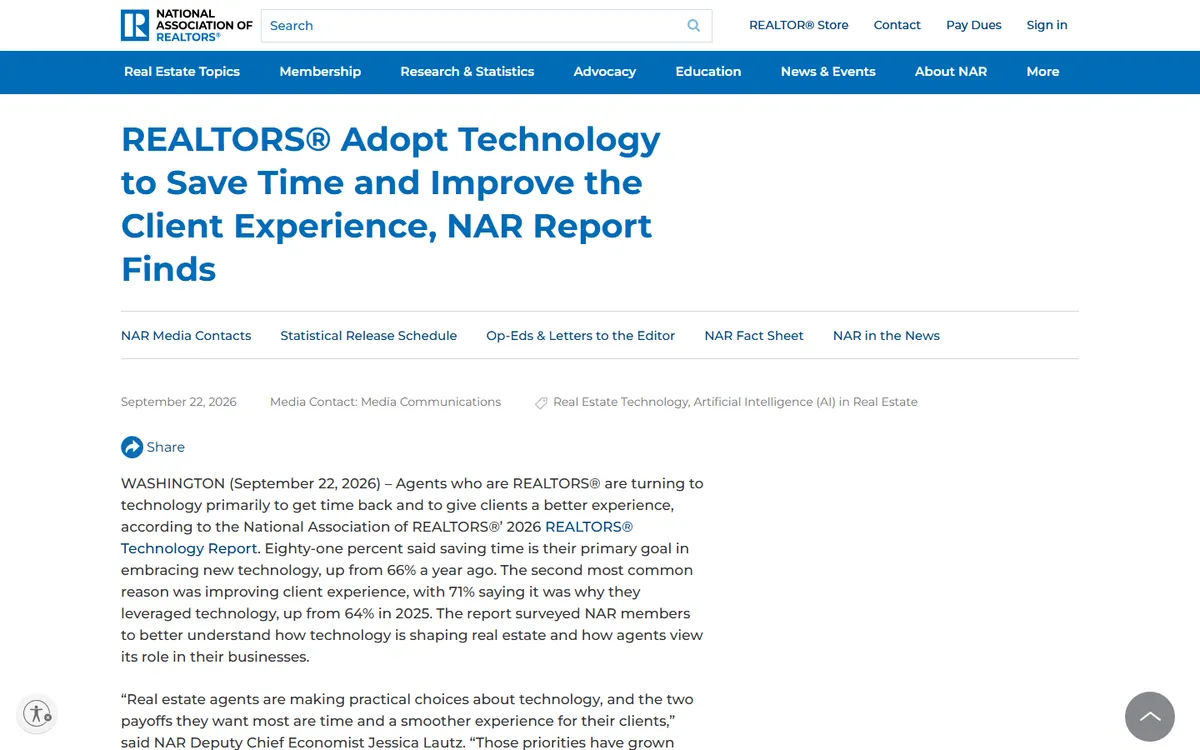
Agents already lean on AI for this. NAR's 2026 Technology Report found 48% of agents use AI daily or weekly, and among AI users, 75% use it for listing descriptions, 56% for social posts and 52% for emails (NAR).
The 3 rules every prompt follows
- Describe the property, not the buyer. The Fair Housing Act bars any advertisement indicating a preference, limitation or discrimination based on race, color, religion, sex, disability, familial status or national origin (Cornell LII). "Next to a jogging trail" describes the home; "perfect for joggers" describes the occupant. Avoid "ideal for families," "perfect for young professionals" and "walking distance to church" (HousingWire).
- Only facts you've verified. AI invents features: a fireplace, a finished basement, a "top-rated" school. The NAR Code of Ethics requires you to avoid "exaggeration, misrepresentation, or concealment of pertinent facts" (Article 2) and to present a "true picture" in advertising (Article 12) (NAR).
- No private client data. Keep seller finances, tenant details, lockbox codes and showing instructions out of public AI tools (HousingWire; NC REALTORS).
HUD withdrew its 2024 guidance on digital advertising in 2025 (Orrick), but the Fair Housing Act itself hasn't changed. As NC REALTORS puts it, brokers stay "fully responsible for the accuracy and compliance of any content they publish" (NC REALTORS).
Set it up once: a standing instruction
Paste this at the start of a chat, or into ChatGPT's custom instructions, so every answer follows the rules:
You are helping a licensed real estate agent write marketing copy. Rules for everything you write:
1. Use only the facts I give you. Never add features, upgrades, measurements, school ratings or neighborhood claims I didn't provide.
2. Describe the property and its features, never the type of person who should live there. Don't mention or imply race, color, religion, sex, disability, familial status, national origin, age or any other protected characteristic, directly or with coded words like "family-friendly," "exclusive," "safe" or "perfect for young professionals."
3. No superlatives I can't prove, such as "best" or "top-rated."
4. At the end, list any phrase I should double-check for accuracy or fair housing risk.
Listing descriptions
1. MLS remarks from a fact sheet
Write MLS public remarks (under [X] characters) for this listing using only these verified facts: [beds, baths, square footage, lot size, year built, updates with years, standout features, location facts such as distance to a park or transit]. Lead with the strongest feature. Plain, specific language, no clichés.
2. Three versions to choose from
Using the same facts, give me 3 versions of the listing description: one concise (60 words), one detailed (150 words) and one that leads with the outdoor space. Keep all three factual.
3. Feature-focused rewrite
Rewrite this listing description so every sentence describes a physical feature or a verifiable location fact. Remove anything that describes who might live here: [paste draft].
4. Fair housing check on your own draft
Review this listing description for fair housing risk and accuracy. Flag any word or phrase that describes the buyer or occupant instead of the property, any coded language, and any claim that needs verifying. Suggest a neutral replacement for each: [paste draft].
5. Virtually staged listing
Write a caption for virtually staged listing photos of [room]. State clearly that the furniture is virtually staged and not included, then describe the room's actual features: [features].
State laws on AI-edited and staged photos vary, so check our virtual staging disclosure guide and Wisconsin's AI photo law.
Social media
6. Just-listed post
Write a just-listed post for [Instagram/Facebook] for [address or neighborhood]: [3–5 verified features], price [price], open house [date/time]. Under 80 words, 3 relevant hashtags, no emoji overload.
7. Carousel outline
Outline a 6-slide carousel for this listing: slide titles and one line of text each, based only on these features: [features].
8. Short video script
Write a 30-second walkthrough video script for [property], room by room, using only these facts: [facts]. Include an opening line and a call to book a showing.
9. Just-sold post
Write a just-sold post for [neighborhood] that thanks the sellers (no names) and mentions [days on market / number of offers, only if I can share it]. Under 60 words.
10. Local spotlight
Write a short post about [local park, market or event] in [town], using these facts: [facts, dates, link]. Keep it about the place, not about who lives in the area.
Emails and follow-ups
11. Open-house follow-up
Write a short follow-up email to someone who visited my open house at [address] on [date]. Thank them, give 2 facts they might have missed ([facts]), and offer a private showing. Friendly, under 120 words.
12. New lead reply
Write a reply to this website inquiry that answers their question, asks 2 questions about their timeline and must-haves, and offers a call: [paste inquiry, with names removed].
13. Price reduction notice
Write an email to my buyer list announcing a price change at [address] from [old] to [new]. Factual and short, with a showing link.
14. Past-client check-in
Write a short, non-salesy check-in email to a past client who bought [X] years ago. Offer a free home value update and mention one local market fact: [fact].
15. Expired listing letter
Write a respectful letter to a homeowner whose listing expired. Offer a fresh marketing plan with 3 specific steps: [your steps]. No criticism of the previous agent. Under 200 words.
Market updates and education
16. Monthly market summary
Turn these market stats into a plain-English monthly update for homeowners in [area]: [median price, change, inventory, days on market, source and month]. Cite the source in one line at the end. Don't predict prices.
17. First-time buyer explainer
Explain [earnest money / contingencies / closing costs] to a first-time buyer in under 200 words, in plain English. Tell them to confirm details with their lender or attorney.
18. Seller prep checklist
Create a pre-listing checklist for a seller with 4 weeks before going live: repairs, cleaning, photos, documents. Format it as a week-by-week list.
19. FAQ for your website
Write 6 FAQ questions and short answers for my website about selling a home in [state]. Mark any answer that depends on state law with "[check state rules]".
20. Blog outline
Outline a blog post titled "[title]" with an intro, 5 H2 sections and a conclusion. Suggest where I should add local data or my own experience.
Business and admin
21. Listing presentation outline
Outline a 10-slide listing presentation: my marketing plan ([your steps]), pricing approach, communication schedule and my track record ([your real numbers]). Use only the numbers I gave you.
22. Showing feedback summary
Summarize this showing feedback for my seller in a neutral, constructive tone, grouped into price, condition and layout comments: [paste feedback without buyer names].
23. Bio rewrite
Rewrite my agent bio in 120 words, first person, using only these facts: [years licensed, areas, designations, real stats]. No superlatives I can't back up.
24. Objection practice
Role-play a seller who thinks my commission is too high. Raise realistic objections one at a time and wait for my answer before replying.
25. Weekly content plan
Create a 1-week social content plan with 5 posts: one listing, one market fact, one tip, one local spotlight and one personal post. Give a one-line idea for each.
Before anything goes live
- Check every fact against the listing file and your own photos.
- Read it once for fair housing: does any line describe a person rather than the property?
- Check your MLS rules. Some MLSs have specific rules on AI-generated remarks and edited photos (our MLS rules guide).
- Keep it human. AI gives you a draft. You're the licensed professional who signs off on it.
For more on the risks, see fair housing and AI listing descriptions. If you'd rather use a tool built for agents, see best AI CRMs for agents.
FAQ
Can real estate agents use ChatGPT for listing descriptions?
Yes. NAR found 75% of agents who use AI use it for listing descriptions. You remain responsible for accuracy and fair housing compliance, so check every line before publishing.
What words should I avoid in AI-written listings?
Anything describing the buyer or occupant instead of the property, such as "ideal for families," "perfect for young professionals," "exclusive," "safe" or "walking distance to church."
Is it safe to put client information into ChatGPT?
Keep private client data out of public AI tools: seller finances, tenant details, access codes and showing instructions. Use property facts that will be public anyway.
Sources
Pages we used for this article, checked on or before the update date above.
- NAR · nar.realtor
- Cornell LII · law.cornell.edu
- HousingWire · housingwire.com
- NAR · nar.realtor
- NC REALTORS · ncrealtors.org
- Orrick · infobytes.orrick.com
Changelog: Oct 17, 2026: first published.