The EU Delayed Its AI Act Hiring Rules to December 2027. Here's What Didn't Change

Prices and facts checked October 13, 2026. We don't accept payment for rankings.
What happened: the EU's "Digital Omnibus on AI", Regulation (EU) 2026/1744, was published in the Official Journal on July 24, 2026 and entered into force on July 27, 2026, days before the original deadline. It moves the high-risk obligations for AI used in recruitment and employment from August 2, 2026 to December 2, 2027 (Cloud Security Alliance).
Why it matters now: if you recruit for EU-based roles, or your clients hire in the EU, you've gained about 16 months. But several obligations already apply, and lawyers warn against treating the delay as permission to wait (Gibson Dunn).
Not legal advice. EU obligations depend on whether you're a provider or deployer of an AI system, and where candidates are. Check with EU counsel.
How we got here
| Date | Step |
|---|---|
| Nov 19, 2025 | European Commission proposes the AI Omnibus |
| May 7, 2026 | Provisional political agreement between Parliament and Council |
| Jun 16, 2026 | European Parliament adopts it |
| Jun 29, 2026 | Council gives final approval |
| Jul 24, 2026 | Published in the Official Journal |
| Jul 27, 2026 | Enters into force |
Sources: Sidley; Cloud Security Alliance.
What moved
- Stand-alone high-risk systems (Annex III), including AI used to recruit, screen and evaluate candidates and manage workers: December 2, 2027.
- AI embedded in regulated products (Annex I): August 2, 2028.
- The Commission's proposed "conditional trigger" was replaced with these fixed dates (Gibson Dunn).
What didn't move
| Obligation | Status |
|---|---|
| Prohibited AI practices (Article 5) | In force since February 2, 2025. The Omnibus adds new bans, with safeguards due by December 2, 2026 |
| Transparency duties (Article 50) | Applied on schedule from August 2, 2026, with a grace period to December 2, 2026 for watermarking by systems already on the market |
| General-purpose AI model rules | Applying since August 2, 2025 |
| AI literacy (Article 4) | Still in the law, but softened to a duty to support staff literacy |
Sources: Cloud Security Alliance; Gibson Dunn; Sidley.
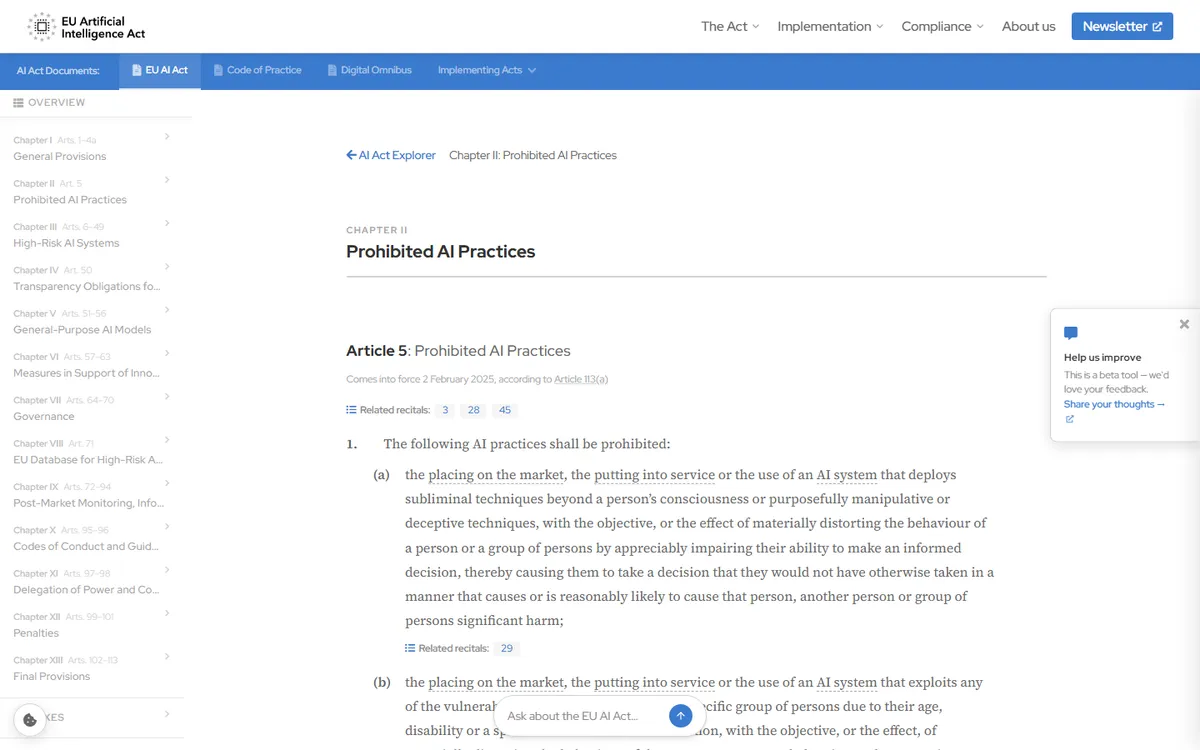
For recruiters, the prohibitions matter most today. Article 5 already bans AI systems that infer people's emotions in the workplace, except for medical or safety reasons (AI Act, Article 5). Any interview tool that claims to read candidates' emotions from video is a problem now, not in 2027.
How to use the extra time
- Map EU exposure: which roles, candidates and clients are in the EU, and which AI tools touch them.
- Classify each tool: finding and messaging candidates differs from ranking, scoring or rejecting them. The latter sits in the high-risk category.
- Know your US obligations too: California's AI hiring regulations already apply to recruiting agencies as employers' "agents" (California Civil Rights Department).
- Ask vendors for their AI Act roadmap: risk management, data governance, logging, human oversight, accuracy and documentation are what high-risk providers will owe you.
- Check for prohibited features now, especially emotion analysis in interviews.
- Build human oversight into any scoring or rejection step, which you'll need in 2027 anyway.
The US has its own patchwork. See California's AI hiring rules and our guide to NYC, Illinois and Colorado.
FAQ
Is the delay final?
Yes. Regulation (EU) 2026/1744 was published on July 24, 2026 and took effect on July 27, 2026, before the original August 2 deadline.
Does the AI Act apply to a US agency?
It can, if you place AI systems on the EU market or the output of your AI is used in the EU, for example in screening candidates for EU roles. Get EU-specific advice.
Are AI sourcing tools "high-risk"?
AI used for recruitment and selection, including filtering applications and evaluating candidates, is in the high-risk category. Simple search and outreach tooling is less clear-cut, so ask your vendor how it classifies its product.
Sources
Pages we used for this article, checked on or before the update date above.
- Cloud Security Alliance · labs.cloudsecurityalliance.org
- Gibson Dunn · gibsondunn.com
- Sidley · datamatters.sidley.com
- Guillaume Périgois · unsplash.com
- AI Act, Article 5 · artificialintelligenceact.eu
- California Civil Rights Department · calcivilrights.ca.gov
Changelog: Oct 13, 2026: first published.