Proposed Rule 707 on AI Evidence Was Sent Back. What Litigators Should Do Now

Prices and facts checked October 13, 2026. We don't accept payment for rankings.
On this page
What happened: on June 3–4, 2026, the federal judiciary's Standing Committee declined to recommend proposed Federal Rule of Evidence 707 on machine-generated evidence. It sent the rule back for revision and further study, alongside the separate question of deepfakes (Proskauer).
Why it matters today: the rule isn't law, but the reliability standard it borrowed from Rule 702 already shapes how courts treat AI outputs. If you plan to rely on AI-generated analysis in litigation, prepare as if Rule 707's logic applies.
Not legal advice. Check the current status with the U.S. Courts rules committees and your local rules before relying on this summary.
What Rule 707 would do
If machine-generated evidence is offered without an expert witness, and the same content from a human would have to satisfy Rule 702, the court could admit it only if it meets Rule 702(a)–(d). In other words, the output must help the factfinder, rest on sufficient facts or data, come from reliable principles and methods, and reflect a reliable application of those methods. Output from simple scientific instruments, such as thermometers and scales, is excluded (Barnes & Thornburg).
The aim was to stop parties sidestepping Rule 702's gatekeeping by offering a machine's output directly instead of through an expert (National Law Review).
The timeline
| Date | Step |
|---|---|
| May 2, 2025 | Advisory Committee votes 8–1 to publish (DOJ dissenting) |
| Jun 10, 2025 | Standing Committee approves publication |
| Aug 15, 2025 – Feb 16, 2026 | Public comment period |
| May 7, 2026 | Advisory Committee notes "greater overall concerns" after comments |
| Jun 3–4, 2026 | Standing Committee sends it back for revision and study |
Source: Proskauer.
Why it stalled
- Too broad: the American Association for Justice warned it could subject routine evidence, like geolocation data and surveillance footage, to heightened standards.
- Too narrow: it only applies when the proponent admits the evidence is machine-generated, so it doesn't address disputed authenticity or deepfakes.
- Cost and fairness: requiring experts to probe complex AI systems could favor well-funded parties.
- Unnecessary: the Justice Department argued Rule 702 already covers AI output.
Sources: Proskauer. Some practitioners urged rejection outright and continued reliance on the existing rules (Becker).
Where this leaves AI-generated evidence today
Without Rule 707, the existing rules still do the work. If an AI-assisted analysis comes in through an expert, Rule 702 applies to that expert's testimony and methodology. If a party tries to offer machine output without an expert, expect the other side to argue it lacks foundation, and expect judges to ask the same reliability questions Rule 707 would have formalized: what data went in, how the tool works, and whether it was applied reliably to the facts (National Law Review).
For practices adopting AI research and document-review tools, the practical lesson is the same as for any expert method: keep records of how outputs were produced, and be ready to explain them.
What to do now if you use AI in litigation
- Document the foundation: the data the AI used, the method, the tool and version, and how the output was produced. That's what a Rule 702-style challenge will probe.
- Expect discovery into your AI use: opposing parties may seek prompts and inputs, which raises work-product questions (Barnes & Thornburg).
- Use an expert for anything consequential. Don't count on the "simple instrument" exception for sophisticated AI tools.
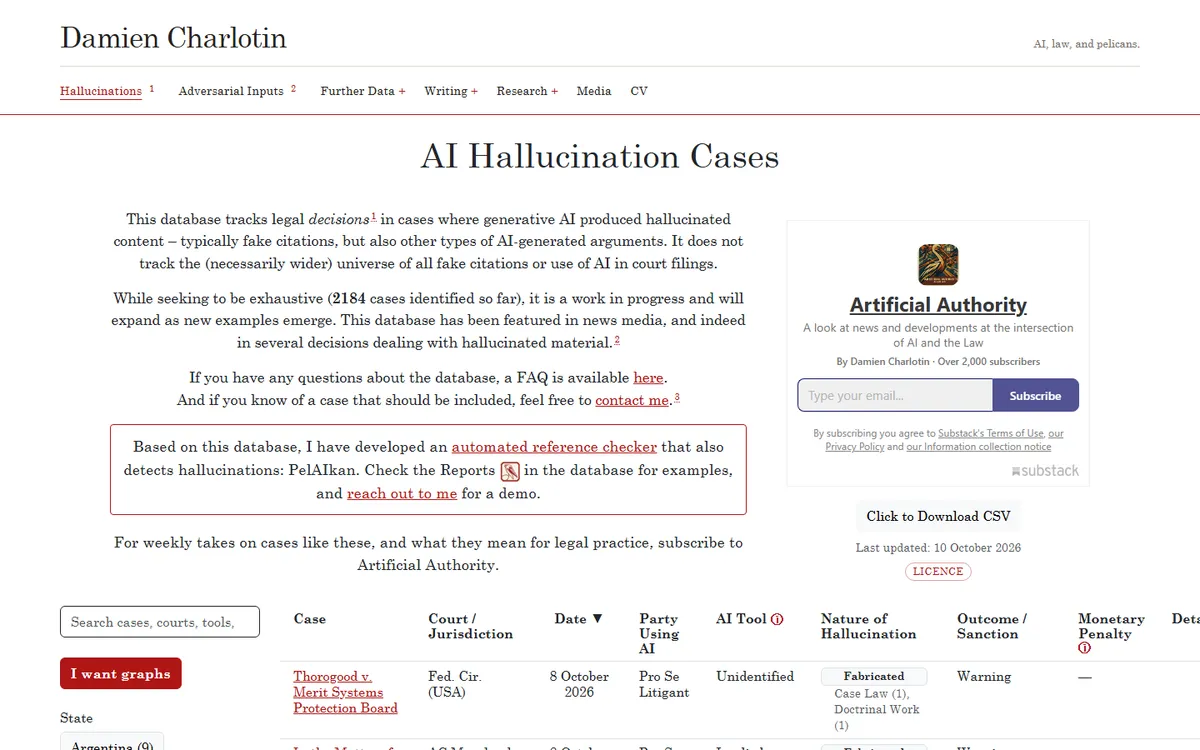
- Keep verifying everything. Separate from evidence rules, courts keep sanctioning filings with AI-hallucinated citations: a researcher's database lists more than 2,000 such decisions (AI Hallucination Cases Database; our guide to ABA Formal Opinion 512).
- Watch the committee: a revised draft is expected at a future Advisory Committee meeting.
Choosing AI tools for your practice? See our guide for solo and small firms.
FAQ
Is Rule 707 in effect?
No. It was published for comment, then sent back for revision in June 2026. It is not part of the Federal Rules of Evidence.
Does Rule 702 already apply to AI evidence?
When AI output comes in through an expert, Rule 702 applies to that testimony. Rule 707 aimed to close the gap where machine output is offered directly without an expert.
What about deepfakes?
Rule 707 didn't address disputed authenticity. The committee is studying deepfakes as a separate issue.
Sources
Pages we used for this article, checked on or before the update date above.
- Proskauer · proskauer.com
- Barnes & Thornburg · btlaw.com
- National Law Review · natlawreview.com
- Becker · beckerlawyers.com
- AI Hallucination Cases Database · damiencharlotin.com
Changelog: Oct 13, 2026: first published.