State AI Therapy Laws in 2026: What Therapists Can Still Use AI For

Prices and facts checked October 13, 2026. We don't accept payment for rankings.

On this page
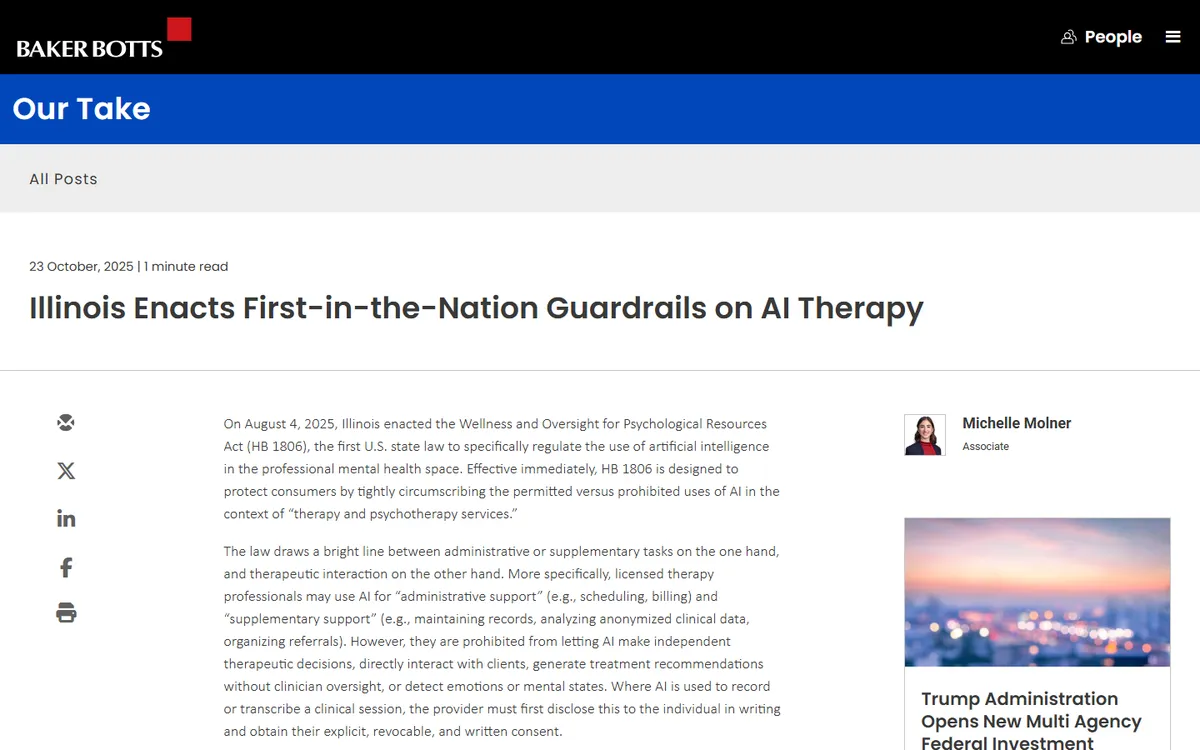
What happened: on August 4, 2025, Illinois enacted the first US law specifically regulating AI in therapy, the Wellness and Oversight for Psychological Resources Act, effective immediately (Baker Botts). Nevada and Utah also legislated in 2025. In 2026, more states followed, including Colorado, Maine and Tennessee (LexisNexis).
Why it matters today: these laws all draw roughly the same line. AI can help you with documentation and admin. It can't be the therapist. If you use an AI note taker, several states now spell out the consent you need first.
Not legal advice. Laws differ by state and some are very new. Check your own state's statute and licensing board, and the client's state for telehealth.
The states, at a glance
| State | Law | What it does |
|---|---|---|
| Illinois | Wellness and Oversight for Psychological Resources Act (2025) | Bans AI making therapeutic decisions, talking directly with clients, generating unreviewed treatment plans or detecting emotions. Allows administrative and supplementary support. Written, revocable consent before AI records or transcribes a session. Fines up to $10,000 per violation |
| Nevada | AB 406 (2025) | Bars AI from performing behavioral health functions reserved for licensed professionals. Civil penalties up to $15,000 or professional discipline |
| Utah | HB 452 (2025) | Regulates mental health chatbots: limits on selling or sharing users' health information and on undisclosed advertising, with a documentation-based affirmative defense |
| Colorado | HB 26-1195 (2026) | AI can't independently provide therapy or diagnosis. AI limited to admin tasks like documentation and transcription under clinician oversight. Tell patients when AI is used. Advance disclosure and informed consent before AI recording |
| Maine, Tennessee | 2026 laws | Restrict AI chatbots offering therapy or posing as licensed professionals |
Sources: Baker Botts; Reason Foundation; Future of Privacy Forum; Greenberg Traurig; LexisNexis.
The line every state draws
Generally allowed, under your professional responsibility:
- scheduling, billing and reminders
- drafting progress notes and documentation you review and sign
- transcription, with the client's consent where required
- organizing records and referrals
Not allowed:
- AI making therapeutic decisions or diagnoses on its own
- AI communicating with clients as if it were a therapist
- AI-generated treatment plans without your review and approval
- marketing an AI tool as therapy, or as equivalent to a licensed therapist
Illinois also bars AI from detecting emotions or mental states, even for licensed providers (Baker Botts). Check whether any "session insights" or sentiment feature in your tools crosses that line.
What this means for your AI note taker
- Get written consent before recording. Illinois requires written, explicit and revocable consent. Colorado requires advance disclosure of the purpose and informed consent. A signed form covers both.
- Offer a non-AI option. Consent must be genuine and revocable.
- Review every note. All of these laws assume the clinician owns the documentation.
- Turn off features that cross lines, such as emotion scoring in states that ban it.
- Keep the HIPAA basics: a signed business associate agreement, retention settings and vendor due diligence (our HIPAA and consent guide).
Comparing tools? See the best AI progress note tools for therapists.
FAQ
Can I still use AI progress notes in Illinois?
Generally yes, as documentation support you review, provided you give written disclosure and get written, revocable consent before AI records or transcribes a session.
Do these laws apply to telehealth across state lines?
Assume the client's state matters as well as yours. Apply the strictest relevant consent standard.
Are more states coming?
Very likely. Legislative trackers show many states considering AI-in-health-care bills, and the pattern is consistent: admin support yes, autonomous therapy no.
Sources
Pages we used for this article, checked on or before the update date above.
- Baker Botts · ourtake.bakerbotts.com
- LexisNexis · lexisnexis.com
- Reason Foundation · reason.org
- Future of Privacy Forum · fpf.org
- Greenberg Traurig · gtlaw.com
Changelog: Oct 13, 2026: first published.